
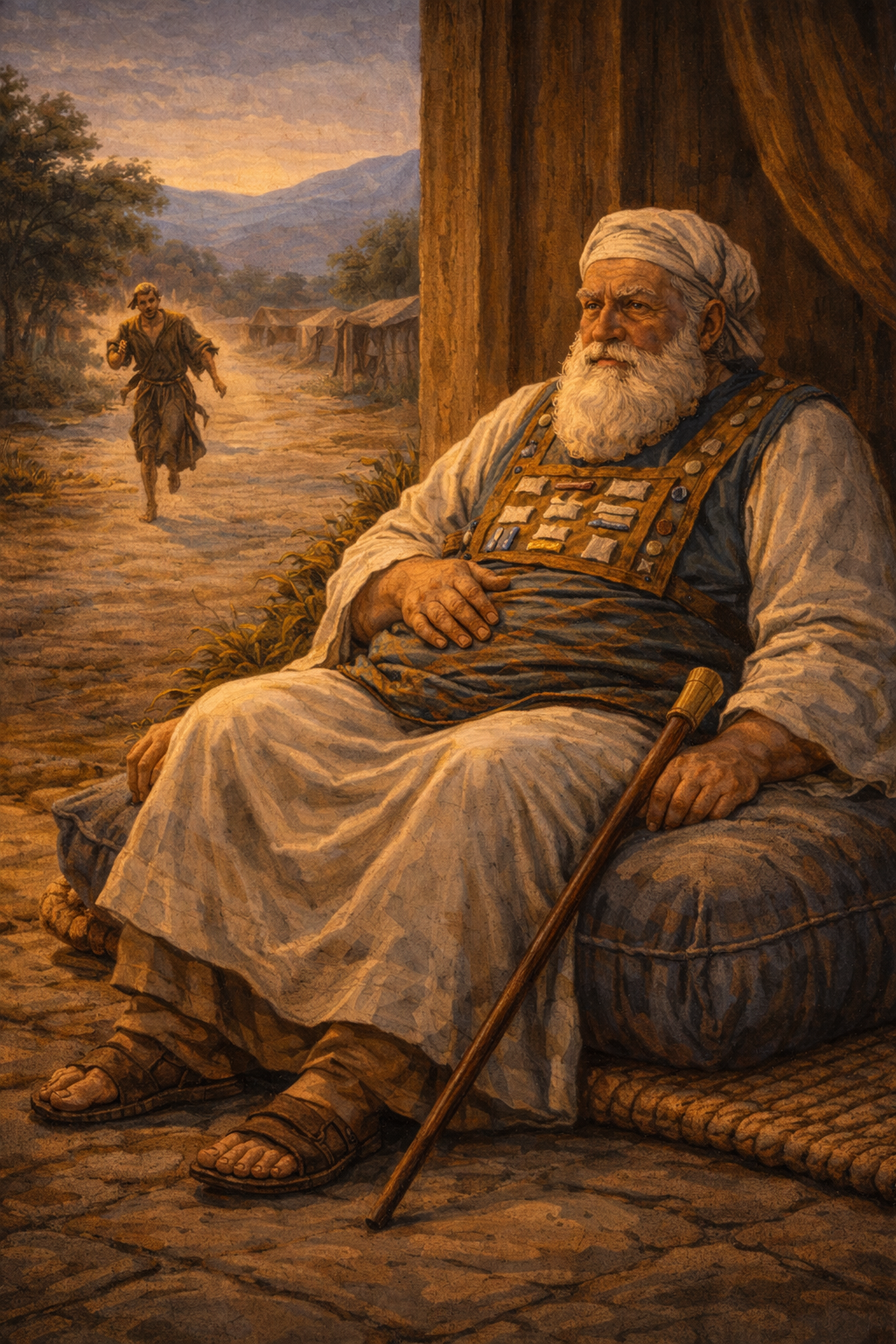
Ichabod: The Glory Has Departed
1 Samuel 4
Main Idea
When God’s people try to manipulate His presence instead of humbly submitting to Him, His glory departs—but the true glory of God ultimately returns in Jesus Christ.
Overview
In 1 Samuel 4, Israel faces defeat at the hands of the Philistines and responds not with repentance but with superstition. Instead of seeking the Lord, they bring the Ark of the Covenant into battle as if it were a lucky charm that could guarantee victory. Their attempt to manipulate God results in devastating loss: thousands of soldiers die, the ark is captured, Eli’s sons are killed, and Eli himself dies. The tragedy culminates in the birth of a child named Ichabod—“no glory”—symbolizing the spiritual condition of Israel. Yet the story points forward to a greater hope: the glory that seemed lost would one day return in the person of Jesus Christ.
Key Themes
1. The Danger of Treating God Like a Lucky Charm
After losing 4,000 men in battle, Israel asks the right question: “Why has the Lord defeated us?” (1 Samuel 4:3). Yet they respond wrongly. Instead of repentance, they attempt to manipulate God by bringing the Ark of the Covenant into battle.
The ark represented God’s throne and presence among His people (Exodus 25:22). But Israel treated it like a charm rather than a symbol of a holy covenant relationship. Their thinking mirrored pagan superstition: if we do this ritual, God must give us victory.
Scripture repeatedly warns against this mindset.
- God desires obedience more than ritual (1 Samuel 15:22).
- External religion cannot substitute for a repentant heart (Isaiah 29:13).
Israel wanted God’s power without submitting to God’s authority.
2. God Cannot Be Manipulated
When the ark arrives, Israel shouts so loudly that the earth shakes (1 Samuel 4:5). The Philistines fear at first, remembering stories of God’s power in Egypt (Exodus 7–12). Yet the battle ends even worse for Israel.
Thirty thousand soldiers die.
The ark is captured.
Hophni and Phinehas are killed.
This moment fulfills earlier warnings. God had already declared judgment on Eli’s household because of the corruption of his sons (1 Samuel 2:27–34).
The lesson is sobering: God will not be controlled by religious symbols or outward displays. His blessing flows from covenant faithfulness, not manipulation.
3. When God’s Glory Departs
When news reaches Shiloh, Eli dies upon hearing that the ark has been captured (1 Samuel 4:18). Soon afterward, Phinehas’ wife gives birth and names her child Ichabod, saying:
“The glory has departed from Israel.” (1 Samuel 4:21)
The Hebrew word for glory, kabod, carries the idea of weight or substance—something of great worth and significance. Ironically, Eli is described as physically “heavy,” yet spiritually his leadership lacked the weight of true devotion to God.
Bible scholar H. L. Ellison insightfully noted that the ark was captured because the glory had already departed. Israel’s spiritual decay preceded their military defeat.
The outward tragedy revealed an inward reality: God’s people had reduced Him to something manageable, something they could use rather than worship.
The Return of God’s Glory in Christ
Centuries after the birth of Ichabod, the Gospel of John declares:
“And the Word became flesh and dwelt among us, and we have seen his glory.” (John 1:14)
The word “dwelt” literally means “tabernacled.” God pitched His tent among His people.
The glory that once filled the tabernacle (Exodus 40:34) and rested above the ark now appeared in the person of Jesus Christ.
The ark pointed to God’s presence. Jesus is God’s presence.
The ark symbolized atonement. Jesus accomplished atonement through His cross (Hebrews 9:11–12).
In Christ, God stepped onto the battlefield of our sin and secured victory through His death and resurrection.
Application
1. Don’t Reduce God to Religious Ritual
It is possible to carry a Bible, wear a cross, or attend church while still treating God like a tool for personal comfort. True faith involves repentance, surrender, and obedience (James 4:8).
2. Recognize the Weight of God’s Glory
God is not merely a helper in emergencies or a cosmic butler fulfilling requests. He is the sovereign Lord whose glory deserves reverence, worship, and submission (Isaiah 6:1–3).
3. Seek the Presence of Christ
Through the gospel, believers experience something greater than Israel ever had under the old covenant. By the Holy Spirit, Christ dwells within His people (2 Corinthians 4:6–7).
Closing Thought
Israel wanted God—but only on their terms. They tried to carry His ark into battle like a rabbit’s foot, hoping for victory without repentance.
But God cannot be bought in small portions or controlled by religious gestures. As one writer put it, many people want “three dollars’ worth of God”—enough for comfort, but not enough for transformation.
Yet the good news of the gospel is that God’s glory has not permanently departed. In Jesus Christ, the glory of God has come near again.
So do not settle for superstition, empty religion, or a manageable version of God.
Come to Christ—the One in whom the fullness of God’s glory truly dwells.

 beyond the sermon
Leave a comment