
Repentance and Restoration
1 Samuel 7:1–17
Main Idea
God graciously restores His people when they turn to Him with wholehearted repentance—putting away idols, redirecting their hearts, and trusting Him alone as their help.
Introduction: The Door That Must Be Opened
Drawing from The Light of the World and Revelation 3:20, the image of Jesus knocking reminds us:
- The door has no handle on the outside
- It must be opened from within
The question is not whether Jesus is willing to come in—but whether we are willing to let Him in.
“God is waiting to be wanted…” — A. W. Tozer
1. A People Who Drifted (vv. 1–2)
Israel had:
- Forgotten God’s greatness and grace
- Turned to idols (Baal and Ashtaroth)
- Suffered defeat and spiritual decline
For 20 years, the ark sat sidelined, reflecting a deeper reality:
God Himself had been sidelined in their hearts.
Yet, there is a turning point:
“All the house of Israel lamented after the Lord” (v. 2)
Application:
- Spiritual drift rarely happens suddenly—it is gradual
- Restoration begins when we begin to feel the weight of our condition
2. A Call to True Repentance (vv. 3–6)
Samuel calls for more than emotion—he calls for action:
What True Repentance Looks Like:
- Put away idols (v. 3)
- Direct your heart to the Lord
- Serve Him only
This echoes The Holy Bible (Deuteronomy 6:5):
“You shall love the Lord your God with all your heart…”
National Response:
- They removed false gods
- Gathered at Mizpah
- Fasted and confessed: “We have sinned against the Lord”
Biblical Insight:
“For godly grief produces a repentance that leads to salvation…”
(2 Corinthians 7:10)
Two Types of Grief:
- Worldly grief → regret without change
- Godly grief → repentance that leads to life
Application:
- Repentance is not just saying “I’m sorry”
- It is turning from sin and turning fully toward God
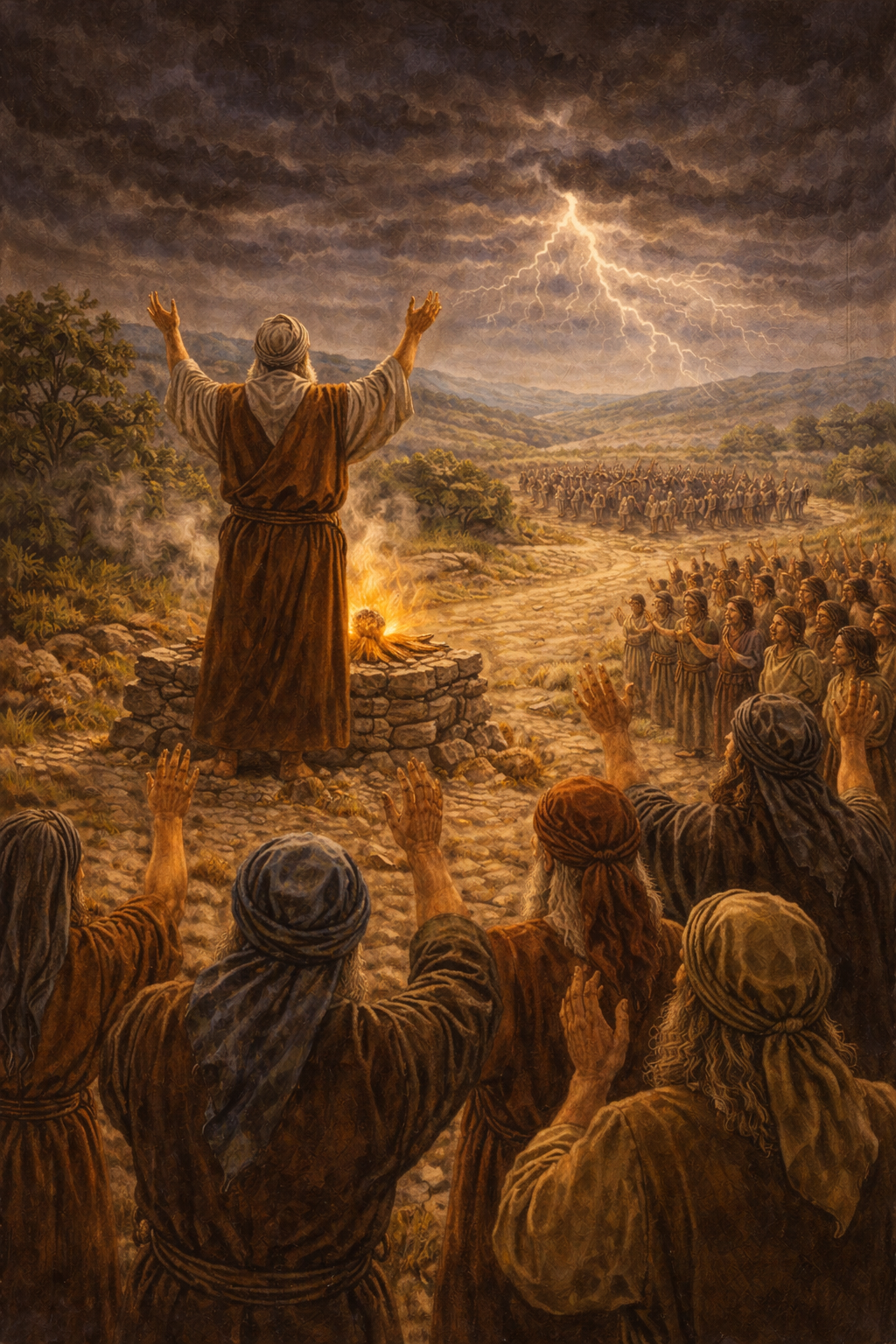
3. A Renewed Dependence on the Lord (vv. 7–11)
When the Philistines attack:
- Israel does not run
- They do not rely on symbols (like the ark)
- They cry out for prayer
“Do not cease to cry out to the Lord our God for us…” (v. 8)
Samuel offers a sacrifice, and God responds:
- The Lord thunders against the Philistines
- The enemy is thrown into confusion
- Israel experiences victory
Key Truth:
The victory did not come from Israel’s strength—but from God’s intervention.
Application:
- Repentance leads to dependence
- Our greatest need is not better strategy, but deeper reliance on God
4. A Reminder of God’s Faithfulness (vv. 12–17)
The Ebenezer Stone
Samuel sets up a memorial and names it:
“Ebenezer” — “Stone of Help”
“Till now the Lord has helped us” (v. 12)
This stone served as:
- A reminder of God’s past faithfulness
- A testimony for future generations
- A marker of restoration after repentance
The Result:
- The Philistines subdued
- Territory restored
- Peace established
Application:
- We need reminders of God’s faithfulness
- Look back and remember: God has helped you this far
5. A Life Marked by Faithful Leadership (vv. 15–17)
Samuel’s ongoing ministry:
- Traveled throughout Israel
- Led as judge and prophet
- Built an altar to the Lord
His life reflects consistent, faithful devotion—not just a moment of leadership, but a lifetime.
Key Applications for Today
1. Don’t Delay Your Return
- Israel waited 20 years
- We are called to respond today
“Today, if you hear his voice, do not harden your hearts…” (Psalm 95:7–8)
2. Remove What Competes for Your Heart
- Identify modern “idols”
- Anything that draws your devotion away from God must go
3. Turn Fully, Not Partially
- God is not calling for adjustment—but surrender
- Wholehearted devotion leads to restoration
4. Trust God as Your Only Help
- Stop relying on substitutes
- Cry out to Him—He alone delivers
Closing Challenge
Jesus is still knocking (Revelation 3:20).
The question is not whether He will come in—
but whether you will open the door.
“Behold, now is the favorable time… now is the day of salvation.” (2 Corinthians 6:2)
How long will Jesus knock before you open?

 beyond the sermon
Leave a comment