
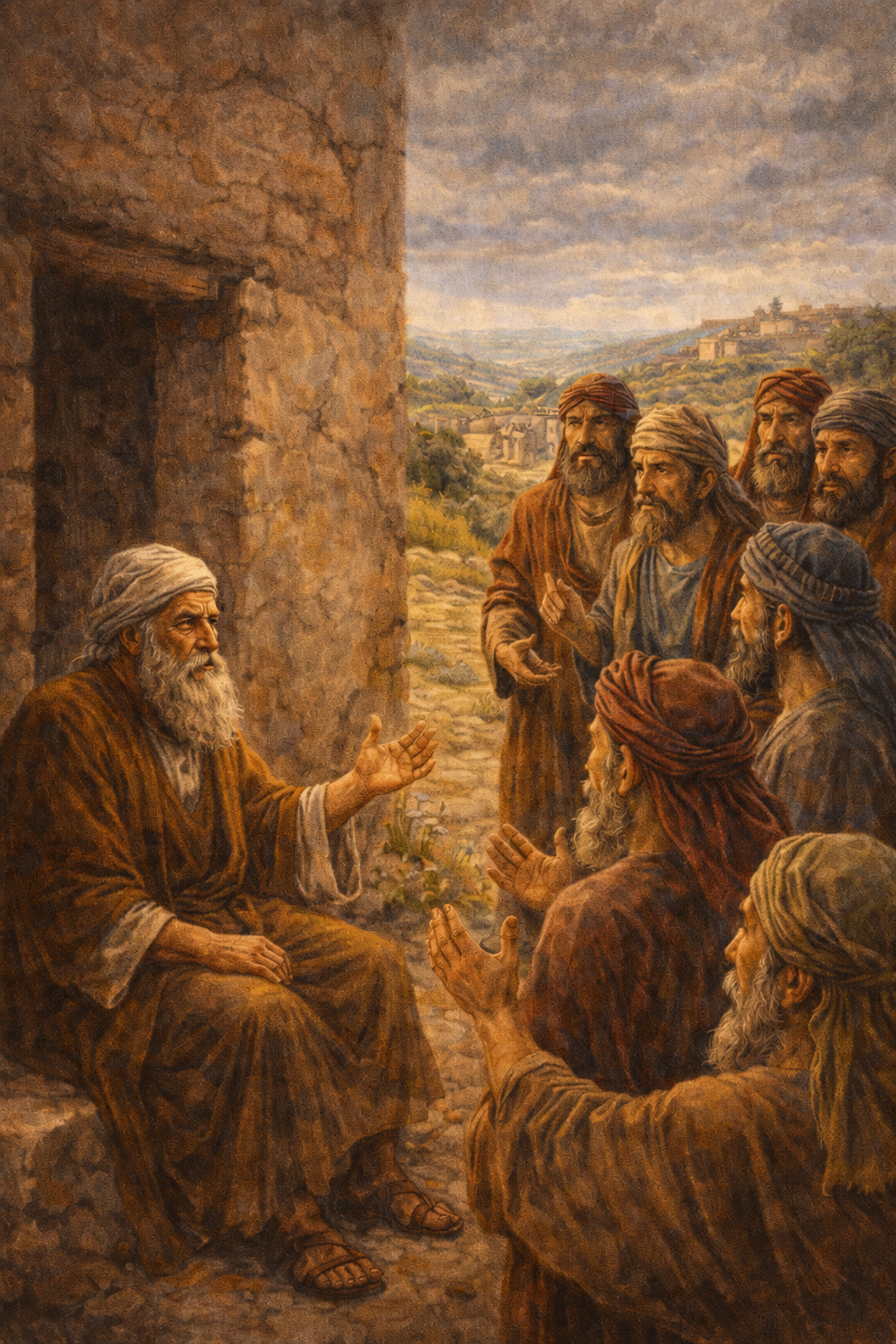
Be Careful What You Ask For
1 Samuel 8
Main Idea
When we reject God’s rule in pursuit of what we think is better, we often discover that what we demanded comes with a cost we were unwilling to pay.
Introduction
A simple childhood moment—saving a quarter for a ride that didn’t satisfy—captures a deeper truth: sometimes getting what we ask for reveals that it wasn’t what we truly needed. That is exactly where Israel finds itself in 1 Samuel 8.
A Problem That Reveals a Deeper Issue (vv. 1–5)
- Samuel is aging, and his sons, Joel and Abijah, are corrupt.
- The people rightly recognize a leadership problem—but wrongly propose a solution.
- Their request: “Appoint for us a king… like all the nations.”
Their issue wasn’t just with Samuel’s sons—it was with God’s rule.
Application:
We must be careful not to let legitimate concerns lead us to unbiblical solutions. Not every problem justifies every response.
A Rejection That Is Ultimately Against God (vv. 6–9)
- Samuel is displeased and takes the matter to the Lord.
- God’s response: “They have not rejected you, but they have rejected me from being king over them.” (1 Samuel 8:7, ESV)
- This reflects a long-standing pattern of Israel’s disobedience.
Rejecting God’s leadership often disguises itself as dissatisfaction with circumstances or people.
Application:
Before we push for change, we should ask: Is this truly about circumstances—or is it about my willingness to trust God?
A Warning About the Cost of Their Desire (vv. 10–18)
Samuel clearly outlines what a king will do:
- He will take your sons and daughters.
- He will take your land and resources.
- He will take your servants and your livelihood.
- Ultimately, you will become his servants.
Key Phrase: “He will take…” (repeated emphasis)
What they saw as freedom would actually lead them back into a form of slavery.
Application:
Sin and self-rule always promise more than they deliver and cost more than we expect.
A Stubborn Refusal to Listen (vv. 19–22)
- The people reject the warning outright: “No! But there shall be a king over us.” (v. 19)
- Their motivation:
- “That we also may be like all the nations”
- A desire for visible leadership and security
- God allows their request, giving them over to their choice.
Sometimes God, in His sovereignty, allows us to experience the consequences of our desires.
Application:
A hardened heart ignores both God’s Word and God’s warnings.
A Pattern That Points to Christ
This rejection of God as King didn’t end in 1 Samuel.
Centuries later, when presented with Jesus:
- Pontius Pilate declared, “Behold, your King!” (John 19:14)
- The people responded, “We have no king but Caesar.”
Humanity continually rejects God’s rightful King in favor of lesser rulers.
The Central Question
Who is your King?
- Not what you say
- Not what you sing
- But who actually rules your life
Who wears the crown?
Who sits on the throne?
Practical Applications
- Examine Your Desires Are you asking for something God has not given—or not yet given?
- Trust God’s Leadership God’s rule may not always be visible, but it is always trustworthy.
- Count the Cost Before pursuing what you want, consider where it will lead.
- Submit to Christ the King True freedom is found not in self-rule, but in surrender to Jesus.
Closing Challenge
Israel wanted a king—but not the Lord as their King.
The question is not whether you have a king—you do.
The question is:
Is it Christ… or something else?
Today is an opportunity to stop resisting His rule and start trusting His reign. Because the King we truly need is not one who takes—but One who gave Himself for us.


Leave a comment