
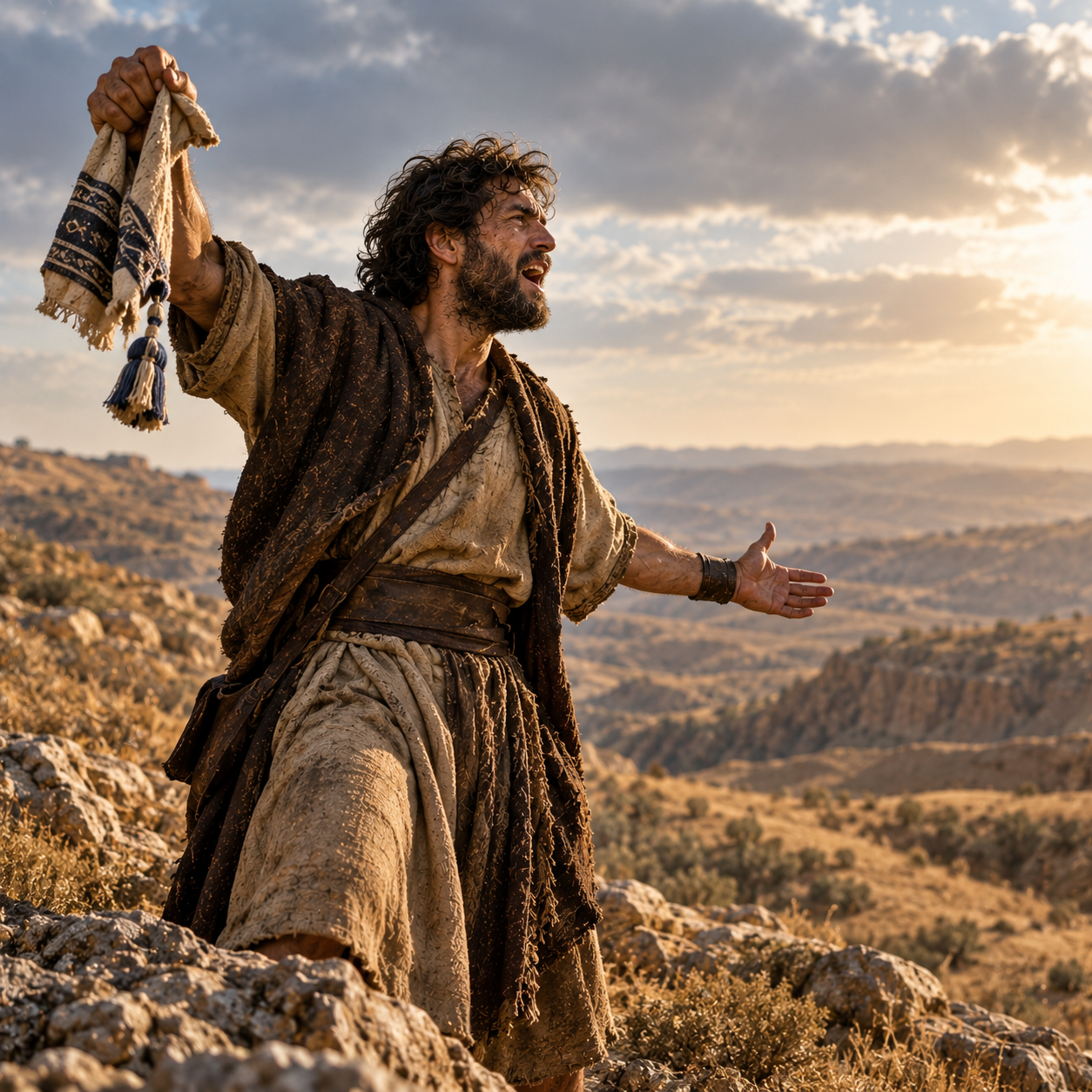
David Spares Saul’s Life
1 Samuel 24
Main Truth
We can trust God’s timing and God’s plan when we know we can trust God’s heart.
David had every apparent reason and opportunity to take matters into his own hands, but instead he entrusted judgment, vengeance, and deliverance to the Lord.
Introduction
Stories of revenge capture our attention because we understand the desire to settle the score. David certainly had reason to want revenge. Saul had repeatedly tried to kill him and was now pursuing him through the wilderness with thousands of soldiers.
Then David was given what seemed like the perfect opportunity. Saul entered the very cave where David and his men were hiding.
The question becomes:
What will David do when revenge, relief, and the throne all seem to be within reach?
1. David Refuses to Take Revenge
David had everything necessary to kill Saul:
- Motive — Saul was trying to kill him.
- Means — David was armed.
- Opportunity — Saul was defenseless.
- Encouragement — David’s men urged him to act.
Yet David refused to kill Saul. His decision was not governed by self-interest but by his trust in God.
David declared: “May the LORD judge between me and you, may the LORD avenge me against you, but my hand shall not be against you.”
— 1 Samuel 24:12
David entrusted three things to God:
- Judgment — “May the LORD judge.”
- Vengeance — “May the LORD avenge.”
- Deliverance — “May the LORD…deliver me.”
David would not accomplish God’s promised purpose through sinful means.
2. David’s Heart Is Struck
David did not kill Saul, but he secretly cut off the corner of Saul’s robe. Afterward, his conscience troubled him.
The hem of Saul’s robe represented something of Saul’s person, status, and authority. David may have recognized that even symbolically he had reached toward something that was not yet his to take.
God had promised David the kingdom, but David would allow God to determine when and how Saul’s reign would end.
David understood an important truth:
God’s promises do not give us permission to force God’s timing.
3. David Boldly but Humbly Confronts Saul
After Saul leaves the cave, David does something remarkable: he walks out into the open and calls after him.
David could be bold because he knew he was not the one ultimately in control.
Having entrusted judgment, vengeance, and deliverance to God, David was free to speak truthfully and respectfully to Saul.
He confronted Saul’s false accusations and then produced the corner of Saul’s robe as evidence that he could have killed him but chose not to do so.
David demonstrates that trusting God does not always mean remaining silent. There can be a time to speak the truth while still leaving the outcome in God’s hands.
Application
When we believe we have been wronged:
- We want to sit as judge.
- We want to settle the score.
- We want to save ourselves.
David chose instead to place those things into God’s hands. His example also points forward to Jesus: “When he was reviled, he did not revile in return; when he suffered, he did not threaten, but continued entrusting himself to him who judges justly.”
— 1 Peter 2:23
Three practical lessons follow:
- Not every opportunity is God’s invitation to walk through the door.
- Not every shortcut is God paving the way for you to act.
- Let God be God.
Conclusion
Waiting on God can be difficult, particularly when we have been mistreated and an opportunity presents itself to fix the situation ourselves.
David reminds us that faith sometimes means refusing the shortcut, resisting revenge, and trusting God with an outcome we cannot control.
We can leave judgment with God.
We can leave vengeance with God.
We can leave deliverance with God.
And we can wait because:
We can trust God’s timing and God’s plan when we know we can trust God’s heart.
Key Takeaway
Trusting God means refusing to take into our own hands what belongs in His.


Leave a comment