
Wisdom and Foolishness
1 Samuel 25
Samuel, the faithful prophet of God, dies at the beginning of the chapter. Before the chapter is finished, Nabal dies as well. Two men die in the same chapter, but they lived very different lives and left behind very different legacies.
Samuel spent his life listening to God and faithfully speaking God’s Word. When he died, “all Israel assembled and mourned for him.” His life had mattered because it had been lived in faithful service to the Lord.
Nabal presents a very different picture. He was wealthy, successful, and prosperous, but Scripture describes him as “harsh and badly behaved.” His very name meant “fool,” and his actions lived up to it.
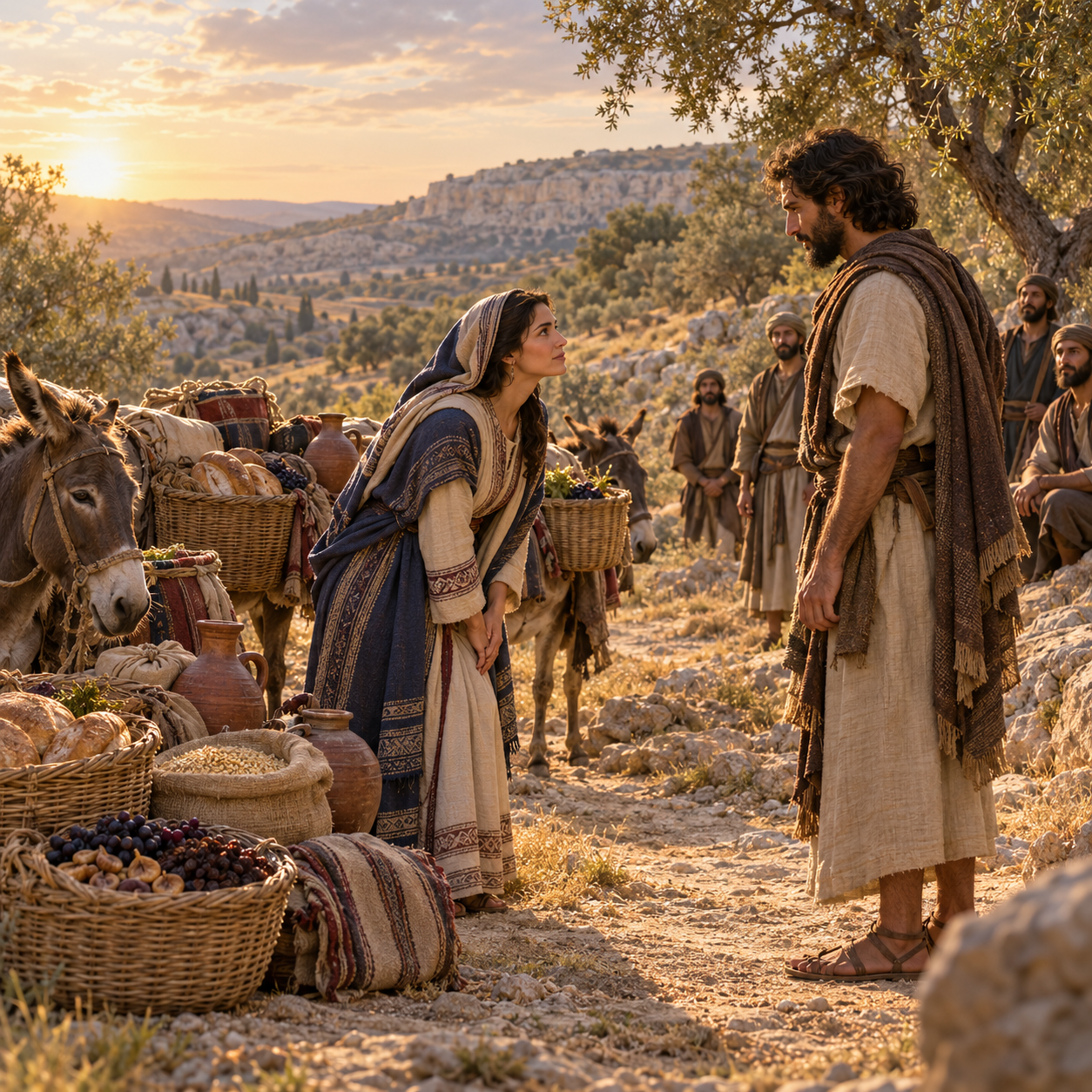
When David’s men approached Nabal during sheep-shearing season, they were not demanding payment or attempting a shakedown. David and his men had protected Nabal’s shepherds and possessions in the wilderness, and David simply asked Nabal to share from his abundance during a time of celebration. Nabal responded with arrogance and contempt.
His response revealed the character of his heart. Nabal was proud, ungrateful, possessive, self-centered, and spiritually blind to what God was doing around him. He had accumulated a great deal during his lifetime, but when his life ended, there was remarkably little worth remembering.
Standing in sharp contrast to Nabal was his wife, Abigail. Scripture describes her as both discerning and beautiful. When she learned that David was coming with four hundred armed men, she acted quickly and wisely.
Abigail met David with humility, generosity, and courage. More importantly, she reminded David of who he was becoming and of what God had promised to do through him. She warned him against shedding innocent blood and attempting to accomplish with his own hand what God had promised to accomplish in His time.
Abigail was God’s grace helping David find God’s way.
David desperately needed that grace.
Only one chapter earlier, David had refused to kill Saul when given the opportunity. He had trusted God to judge Saul, fulfill His promises, and determine David’s future. But when Nabal insulted him, David’s anger took control. He strapped on his sword and headed toward Nabal’s house intending to kill every male there.
The man who had trusted God with Saul was suddenly prepared to take vengeance on Nabal.
David was still becoming the man God intended him to be.
Through Abigail, God graciously stopped David before one angry decision became a lifelong regret. David recognized what God had done and praised Him for restraining him “from bloodguilt and from working salvation with my own hand.”
The Lord later dealt with Nabal Himself. David did not need to take vengeance because God remained the Judge.
The chapter therefore gives us four very different people:
Samuel, the faithful prophet;
Nabal, the fool;
Abigail, the woman of wisdom;
and David, the man of God still in the making.
Their lives remind us of several important truths:
Live your life understanding its brevity.
Samuel and Nabal both died. One was deeply mourned; the other appears to have been little missed. Our lives are brief, and someday what will remain is not primarily what we accumulated but the kind of people we became and the influence we left behind.
Allow the Lord to be Judge.
Anger can tempt us to settle scores, defend ourselves, and take matters into our own hands. David nearly did exactly that. But God does not need our help administering justice. We can trust Him with the people who hurt, insult, or mistreat us.
Be ready to recognize the Lord’s gracious leading.
Sometimes God’s grace comes through someone who confronts us, slows us down, or tells us what we do not particularly want to hear. Wisdom means being humble enough to listen when God puts an Abigail in our path.
Trust the Lord to fulfill His promises.
David did not need to force God’s plan forward. God had promised him a kingdom, and God was perfectly capable of giving it to him. The same is true for us. We do not have to manipulate circumstances or compromise obedience to obtain what God wants for us.
Sometimes what we want gets in the way of what God wants for us.
Wisdom is learning to trust God enough to listen, wait, obey, and allow Him to accomplish His purposes in His way and in His time.


Leave a Reply